
LJB, Founder, The Wine and Climate Change Institutewww.twacci.org
Freshwater Management and the UN's SDG deadline …

From the whisper of a drop of rain falling onto a humid forest floor to the roar of a sea storm thundering against a stony cliff, water speaks. It shares its memories, conveys its needs, and imparts its wisdom. Despite all of its forms, the many voices of this elusive and magical shapeshifter are not being heard. And time is running out. In 2015, the UN fully committed itself to implement its 17 Sustainable Development Goal Agenda by 2030. Presently, the concern is that COVID-19 and its far-reaching, socio-economic impacts have retarded this progress, and an urgent call has been raised for new and innovative approaches to further propel the needed implementation actions. The UN suggests that the Covid pandemic is the main setback, but there are other, more critical factors that are hampering progress, particularly in the agricultural sector and pertaining to freshwater management and luxury crops. Here, the implementation of sustainable farming practices is being impeded by
1) a lack of understanding of the severity of conventional farming’s ecological impacts,
2) a disregard for, and resistance to, Indigenous Knowledge Systems (IKS) and their Traditional Ecological Knowledge (TEK), and
3) a Western mindset divorced from nature. Combined, these factors create an inability to perceive an incentivising business case sufficiently robust to trump these obstacles.
With more prolonged and severe droughts and irregular rainfall patterns, increased freshwater irrigation is being relied upon as the primary adaptation tool, when it is mitigation’s greatest foe. One of the greatest threats to the climate is the use of agricultural irrigation, which accounts for 70% of the world’s freshwater withdrawal. This can be changed. The transition away from freshwater irrigation to dry farming or to rainwater harvesting could substantially reduce agriculture’s water footprint, reducing surface and groundwater depletion as well as increasing soil health and yields. Investing in sustainable agricultural practices needs to be understood to not be an obligation, but an opportunity. This is particularly critical in the context of luxury crops such as cacao, coffee, sugar, tobacco, and wine, where large-scale, industrial irrigation is unnecessarily used in excess to increase yields and profits, compromising ecological viability in favour of economic gain. In this context, the risk of not irrigating is mistakenly perceived as greater than the damage and short-term advantages of irrigation.
The cultivation of luxury crops has fallen into the same intense farming systems as the cash, subsistence crops. Wine, as well as cacao, coffee, tobacco, and sugarcane, have become mono-cultures, grown in non-indigenous climates and habitats. The foreign habitat and lack of biodiversity create the need for chemical fertilisers, pesticides, and herbicides. This is then acerbated by freshwater irrigation used to further artificially increase yields resulting in soil degradation, erosion, salinisation, and inferior crop quality, which further increases carbon release and feeds the cycle of extreme drought and rain patterns, imploding the eco-systems. There is no case for employing freshwater irrigation in luxury crops. The combination of dry farming and limited supplemental irrigation through harvested rainwater, using region-appropriate TEK and native varieties, is the only viable economic, ecologic, and socially-responsible solution towards securing optimal sustainable crop yields.
LJB, Founder, The Wine and Climate Change Institute
www.twacci.org

Freshwater East in south Wales
Is Earth going to run out of water?
A few years ago I was on a trip to the U.S. - not something I do often. I had left Scottsdale, Arizona for Paris, France, as a student in 1989. But the memories of our garden have always remained fresh in my mind. Our sparkling blue pool was framed by vibrant crimson bottlebrush bushes, shimmering silver-dollar trees, and rampant bougainvillea (none of these being indigenous, by the way). There were grapefruit, orange, and lemon trees surrounded by manicured lawns … all kept drenched by a daily flood and spray-sprinkler system from the neighbourhood canal in which we used to catch crayfish and play. It was an oasis of heavenly perfumes and colours. Yet the landscape below me then, as the plane approached Sky Harbour, was shockingly unfamiliar. As we cruised over Camelback Mountain, I handed the flight attendant my pile of empty plastic water and wine bottles, looked out the window and spotted the family home … a patch of dark green in a vast tableau of brownness. In fact, the only green I could detect were the patches of gardens and the larger swathes of golf courses. This time, this trip … the tired topography was ever starker and I felt as though I were looking down upon a different planet.
Headlines scream of water shortages, dried-up aquifers, emptied reservoirs, and drought. Can the Earth really run out of water? It certainly seems as though it can, but, no, it cannot. So does that mean we have nothing to worry about? No.
Water, in all her physical manifestations, will always remain on Earth, as part of Earth’s atmosphere. Whether a cascading waterfall, a tropical rainfall, an Arctic iceberg, or the steam from your tea kettle, her cycle is never-ending and almost perfectly self-contained. Nor do we have to worry about Earth becoming the next Venus: the scientific consensus is that the Earth does not absorb enough sunlight for the same runaway greenhouse scenario.
The problem is that we don’t have enough freshwater available. Further, the freshwater we do have is not where it used to be found. This gives the artificial impression that water shortages are “local” problems, which too easily allows us to say “ah, so then it’s not MY problem”. This is dangerous, for the fact is that any shortage, anywhere, is indicative of something going terribly wrong somewhere within the global water cycle: it is a holistic system and isolated issues are inherently impossible.
For me, it feels like climate change is pushing water from one state into another too quickly … its transformations are in fast-forward. Heat is evaporating it from rivers and melting it from icebergs … its natural rhythms between each of its physical forms are not being allowed to play out in real-time. We are using freshwater faster than the Earth can replenish it. We use too much and we mismanage what we use. We are not working at the Earth’s pace, we are working against it - literally swimming upstream.
70% of the Earth’s surface is water. And 97.5% of that is seawater and unfit for human consumption. So of the some 3% freshwater, only 1.2% can be drunk, the rest is locked in glaciers, ice caps, permafrost, or the ground. And of the little freshwater we have, 70% is used by global agriculture. Most of our drinking water comes from rivers and streams – and we’re not at all doing a good job in keeping that clean and safe, are we?
Ultimately, it is water’s ability to endlessly morph, and to be uncomplainingly used and reused, that is her greatest gift. But this knowledge offers little solace against the great threat of our continued mismanagement and over-use of what is our most essential ingredient to life.
Polyculture & Sustainable Wine: The Future of Wine Americas Conference, June 2021
Porto Protocol Climate Talk: A Wine World Beyond Glyphosate
Porto Protocol Climate Talk: Water Usage in Wines and Vines
Welsh Wine Week Day 5, LLanerch 2017 Sparkling Blush "Cariad"
Welsh Wine Week Day 4, Conwy 2018 Solaris
Welsh Wine Week, Day 3 ... Ancre Hill 2018 Chardonnay

Welsh Wine Week 2020, Day 2 : Tintern Parva 2017 Bacchus tasting

WELSH WINE WEEK 2020, DAY 1: Conwy's 2019 Regent rose
Welsh Wine Week is almost here! Join us ...
FROM THE WELSH WINE WEEK WEB-SITE:
Hot, sandy beaches dotted with palm trees ... medieval castle ruins nestled in rugged coastlines ... a buzzing indie food scene and days spent meandering through wine country sipping crisp whites, fruity reds, and refreshing sparkling wines. Where am I? Italy? No. I'm home in Wales, a wine-producing country and a food-lover's heaven.
With staycations now the "new norm" and climate change warming things up, the timing is perfect for the Welsh wine scene to show-off its treasures.
Whether the Romans brought their wine to Wales or grew it, is a subject for debate. But we do know that after the medieval period of monastic viticulture, the first commercial vineyard in Britain was in Wales, planted by the Marquess of Bute at his Castle Coch, outside Cardiff, in 1875. This definitely bestows upon Wales a distinct historical pedigree.
There was another spurt of vineyards in the 1950s, but the real revival in Wales began in the late 1970s.
“The savvy growers watch and learn,
and aren't repeating the same mistakes
made by other regions.”
The Welsh may make less wine than the English, but it's making its mark on the wine world in a uniquely Welsh way. Winemaking here has increased seventy percent over the past decade and its future is more than promising. The secret is that the grape growers know how to turn their perceived disadvantages, into advantages. For example, Wales will always be small, but this means that large-scale industrial winemaking won't ever make sense. And it creates an enormous potential for discovering individual, distinguishing micro-climates. Their vision is that of small-quantity, terroir-driven, quality wines.
In wine, smaller is better. If Wales is considered the smaller sibling, it knows how to take advantage of that, too.
The savvy growers watch and learn, and aren't repeating the same mistakes made by other regions. They know that they are perfectly positioned to leapfrog into the lead. Nowhere is this better demonstrated than in their work in sustainable, organic and biodynamic growing practices.
Many producers are choosing to go with the Old World-wine style. They can do this. Welsh grapes taste, well, "Welsh". They taste of the cool climate, the distinctive soils, and the lush landscapes in which they are grown as opposed to tasting as though grown anywhere, in bulk. Wales has a rich geochemical diversity. Think of its mining history and ancient volcanic activity. Wales, too, is on average, topographically higher than south-east England, providing vineyards with optimum exposure.
You'll find many of the same cool-climate grape varieties being grown in Wales as in England. They both started with the successful German hybrids, from Bacchus to Solaris. However, climate change means that the classic French and International varieties, particularly the three Champagne grapes (Chardonnay, Pinot Noir, and Pinot Meunier), now grow alongside them. And as with England, the sparkling wines are taking the lead. Welsh sparkling wines are consistently winning international awards. That said, I've got my eyes on the reds: the Pinot Noirs and the new Cabernet Franc plantings.
Where to start? From Glyndwr in the Vale of Glamorgan established in 1979, to the newbies at Gwinllan y Dyffryn (Vale Vineyard) in Denbighshire, you are spoiled for choice. Welsh wines are world-class, and they have indeed, given us the world at our feet.
Nordic Development Fund publishes Private Markets for Climate Resilience study
“Private Markets for Climate Resilience (PMCR) is the first initiative by a development institution to better understand climate resilience solutions provided by the private sector. The Inter-American Development Bank (IDB) and the Nordic Development Fund (NDF) have funded this assessment that focuses on transport and agriculture, and examines current best practices and opportunities related to climate resilience, by identifying leaders that are shaping the national markets, highlighting products, services, tools, and processes.” (from Global Report)
Linda Johnson-Bell of TWACCI participated as a Global Team Expert in Viticultural Resilience.
READ the Report here: https://ndf.fi/sites/default/files/news_attach/pmcr_global_report.pdf
My France Favourites: Linda Johnson-Bell
Here is a throw-back from my time at FRANCE TODAY !

My France Favourites: Linda Johnson-Bell
By France Today Editors -
January 16, 2014
Here France Today’s wine columnist, Linda Johnson-Bell, opens her little black book with some favourite picks for travel in France. An award-winning wine critic and writer, Johnson-Bell was born in the U.S. and studied in Paris (Sorbonne, SciencesPo) when at Scripps College in California. After completing graduate studies at the l’Université de Nice, she served as the Editor and Publishing Director of the French wine magazine, Vintage. She now divides her time between London, Oxford, and Venice. Her books include Pairing Wine and Food, Good Food Fine Wine, The Wine Collector’s Handbook, The Home Cellar Guide, and the forthcoming Wine and Climate Change (April 2014). She travels regularly as a European competition judge, authors the wine site www.TheWineLady.com and lectures/consults on climate-based future viticultural policy issues.
What’s your perfect day in Paris?
It would have to be a very long day so to fit in everything! First, I would get up and jog along the Seine, then meet my best girlfriends for coffee and make our way to the women-only Le Hammam Pacha in St Denis for a transporting session of eucalyptus steam-baths, savon noir et gommage, massages, swimming and a lunch of lamb chops, taboulé and mint tea. The afternoon would have a visit to La Balajo for a tango lesson followed by a bit of browsing in the nearby bookshops. I’d go home for a quick change, have cocktails at Harry’s Bar, dinner at my friend Patricia’s as she always lets me do the cooking. Then we’d hit the town – all of our old haunts that have sadly changed a lot since we were young. So, in my perfect day, we’d all still be 25 years old! Chez Castel for a bottle of Champagne (since Jean Castel died, the faded glamour has, too) and then after midnight, to Les Bains Douches to dance until we drop. Then, we’d walk home barefoot in the rain and stop at the boulangerie around the corner for the very first brioche out of the oven.
Your favourite restaurant in Paris?
It would be a restaurant that I did not go to for work (wine), but for pleasure: Le Gamin de Paris near the Marais (51 rue vieille du Temple). It rarely has tourists. The late owner was a stern, but warm woman who knew us all by name. It was here that I learned to love snails. They prepare and serve them on a bed of garlicky, buttery potatoes, gooey on the inside and crispy on the outside, in a poêle. So I started by having a mouthful– one snail and lots of potatoes– until eventually, I weaned myself off the potato and preferred the snail on its own.
The most sublime meal you’ve ever had in France?
It would have to be when I was Editor of the wine magazine, Vintage Magazine. I was not yet a “foodie” and was being dragged to every Michelin-star restaurant opening, focusing on the wine list, and stupidly, not appreciating what I was being taught. Looking back, I realise how much eventually seeped into my consciousness (and onto my thighs). I remember one event particularly well. One morning my publisher and I flew down to Monte Carlo where we were taken by helicopter to the Louis XV for an article we were writing on Alain Ducasse. When we arrived and were sitting down in his tasting kitchen (a room set off behind glass doors where they bring you little samples of each dish as they prepare them before the main event upstairs) when he burst in the room and told us that he had just learned that he’d won 3 Michelin stars in Paris – making him the first chef to have two 3-star restaurants (he went on to have 3). The food that day was filled with his passion, excitement and pride. Unforgettable.
Best travel memory in France?
I’d spent a week skiing at Avoriaz with a group of friends. Our chalet rental finished on a Friday and we didn’t want to leave the fresh air. So we booked a chambres d’hôte which ended up being the most amazing surprise. It was an old farmhouse and the couple had had 10 children, so they had turned an entire wing of the house into chambres. We were her only guests, and she served us the most stunning raclette in her dining room. But first, she spent the day taking us around to where her neighbour made her cheese, and where another baked her bread, and she took hours showing us her smoke houses where she taught us how to do it and she let us work with her. She was so full of fabulous stories, we couldn’t leave, and we were all late for work on Monday morning.
Favourite French region to travel?
Burgundy. One bottle at a time.
Top museum in France?
The new rooms for Monet’s Les Nymphéas at l’Orangerie. I go at off-peak times so I can be alone and sit on the floor in the middle and lose myself in the hazy violet watery magic of it.
Favourite French film?
Claude Lelouch’s Un homme et une femme (1966)
Souvenir for friends back home?
I always drive back from Paris with a boot full of wine, cheeses, truffles, fresh pastries for my sons and that morning’s shopping from the market for dinner that night. And, Eiffel Tower mugs and key chains – the essential kitsch.
Boutiques where you shop during the semi-annual soldes?
I like the kitchen shops where I pick up kitchen tools for uses that I did not even knew existed. And I am a puce fan … because there are bargains all through the year… I collect antique wine paraphernalia.
A destination in France that you’re dying to visit?
The only bit I have never been to: the island of Corsica.
Tip for first-time visitors to France?
Tell yourself that it is only your first-time and that you will return – that way you do not panic and try to do too much and end up not doing anything properly. Treat it like a “first bite”.
THE BOTTOM LINE: Crop Suitability
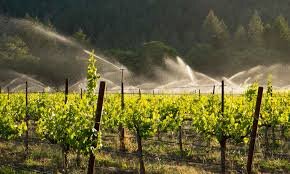
This morning I was interviewed by a journalist for The Times’ Raconteur supplement. They’re doing a mid-December piece on the current state of the wine industry and she was specifically targeting sustainability and climate change. Every time I talk about this – and I talk about it to anyone who will listen – I try to find new ways to abbreviate and organise my thoughts. Honing concise and pithy sound bites is not something at which I excel. But this morning, I got a bit closer. It became blindingly obvious to me that the crux of the issue is Crop Suitability.
I attended a tasting of New Mexican, Arizonan and Texan wines in a little French bistro in Manhattan last week. The producers all told me that they had to irrigate in order to survive that climate. Shame, because otherwise, they were doing everything else right. The majority were organic or biodynamic. But before there can be organic, natural, zero-carbon, green or biodynamic wines with any authenticity, there has to be “dry farmed” wines, first. This has to be the starting point, or all other sustainable efforts become pointless. “Sustainable freshwater irrigation” is an oxymoron in the context of wine, a luxury crop. True viticultural sustainability can only be achieved through dry farming, as has been practiced in Europe’s finest vineyards for centuries. If we have taken the vitis vinifera away from its native soils only to then contrive and manipulate foreign environments in order to grow it, then we have to ask ourselves if this is legitimate pursuit in the context of today’s climate-change driven water wars. If a producer cannot transition to dry farming (wrong soil/insufficient winter rainfall), then they have to look at crop diversification or migrate – that what other luxury crops such as chocolate, coffee and tea are already doing. As Randall Grahm of Bonny Doon says: “If we can’t farm a particular crop in a truly sustainable way we have no business farming that crop”.
Chemical Winefare: Pesticides in Wine (as published Nov 2019 by IMBIBE MAGAZINE)
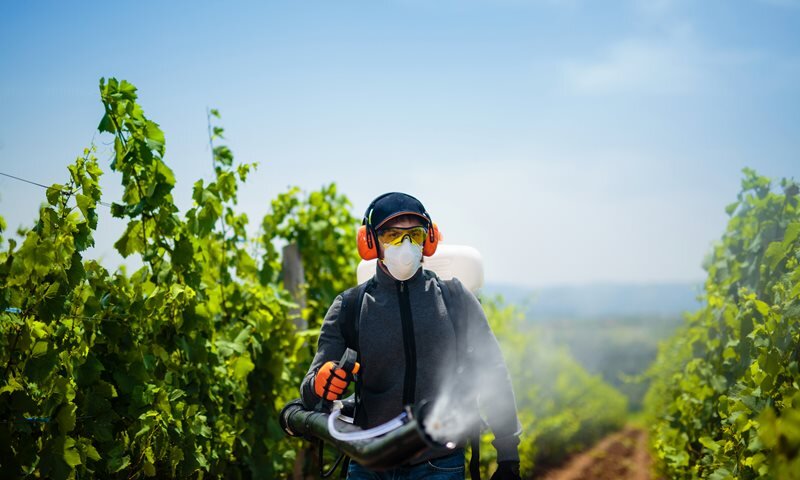

As the number of alleged pesticide-related illnesses and deaths mount, Linda Johnson-Bell argues the case for the organic, biodynamic and safer future of winemaking
In March of this year, the Bordeaux High Court acknowledged that Sylvie Berger’s Parkinson’s disease was work-related and held Medoc’s Château Vernous, her employer since 2003, responsible.
James-Bernard Murat died of lung cancer in 2012 after spraying his Bordeaux vineyards for 40 years with a substance that is now banned, according to reports. His cancer was confirmed to be 'linked to his profession’. Denis Bibeyran, after 24 years of applying pesticides to his employer’s grape vines, died of bile duct cancer in 2009 at the age of 47. His sister is still fighting his corner.
These are just a few high-profile court cases surrounding wine and pesticide use, and all are related to industry workers. Now there are cases being brought by local communities and schools. In May 2019, two wine producers in Villeneuve, in the Libournais, were acquitted over the spraying of chemicals next to a school. Château Escalette, owned by Catherine Verges, the mayor of Villeneuve, and Château Castel la Rose in the Côtes de Bourg, were accused of spraying fungicides on their vineyards during high winds, though the court ruled that there was insufficient evidence to prosecute.
In January, in response to this increasing public scrutiny, the Château Clément-Pichon announced that it was advancing its plans to convert to organic farming due to mounting tensions over the construction of a new school being built nearby. Isabella Saporta, in her book Vino Business, tells us about a boulangère who has lived 150 metres from a vineyard for 25 years. Marie-Hélène agreed to participate in a hair analysis study and was shocked when the results showed three pesticides, two endocrine disruptors and a carcinogen in her system. When she went public with the findings, many in the community boycotted her bakery.
Despite evidence, industry insiders continue to deny the dangers of glyphosate and other chemicals
This comes after a 2015 report by a group of French health agencies found that use of pesticides on vineyards 'cannot be excluded’ as a reason for high rates of child cancer in Sauternes. Isn’t anything being done? Well, yes. For one, the French government launched the Ecophyto plan in 2008 to reduce the overall use of pesticides. However, last year, the government was moved to launch a new plan after pesticide use was shown to have increased 12% between 2014 and 2016.
At the launch of Ecophyte 2+, President Emmanuel Macron urged a ban of glyphosate, only to renege on this promise in January because farmers say that there is no alternative to the herbicide that is both economically viable and environmentally friendly. But Toby Bekkers, an Australian organic viticulturist, confirms that there are six other weed-control options: mechanical weeding, mowing, mulching, grazing, steam/flame and manipulation of the weed population. Each of these may have a few downsides, such as being slower or using more fuel, but these seem minimal compared to potentially causing cancer.
AN OPEN SECRET
It would be unfair to present this as a uniquely French problem. It isn’t. It’s everywhere – if you can find it. Some feel secrecy is equally pandemic. As anti-pesticide activist Marie-Lys Bibeyran (sister of Denis Bibeyran) says: ‘Nothing filters through in Bordeaux. Everything is taboo. Everything is opaque. 'If you look for her 'blacklist’ of wine-producing châteaux in the Médoc on the French Collectif Info Médoc Pesticide site, you won’t find it – it has been deleted.
Further, Les Dossiers wrote in 2017 that a report from the French Agency for Food, Environmental and Occupational Health & Safety analysing the impact of pesticides on agricultural workers was 'edited’ for its planned release before being cancelled entirely. So what do things look like across the pond? According to the California Department of Health, breast cancer rates in Sonoma, Napa and Mendocino Counties are 10%-20% higher than the national average, and Napa County has the highest cancer rate for children in California. Last year, a Californian judge ruled that the cancer warning label on the weed killer Roundup, which has glyphosate as its main ingredient, doesn’t have to be included, though the state still lists the herbicide as 'probably carcinogenic’.
In 2018, consumer group Moms Across America released research revealing that 10 major California wines contained glyphosate. Recently, the US Public Research Group (US PIRG) Education Fund tested 20 products – 5 wines and 15 beers – and found traces of the herbicide in 19. Tested wines included Beringer, Barefoot and Sutter Home. However, industry insiders deny the dangers of glyphosate and other chemicals.
Splashed across the Wine Institute’s website is a quote by Dr Carl Winter from University of California, Davis: ‘Wine as a source of glyphosate should not be of concern. An adult would have to drink more than 140 glasses of wine a day over 70 years containing the highest glyphosate level measured to reach the level that California’s Office of Environmental Health Hazard Assessment has identified as "no significant risk level’’.’ He isn’t arguing that there may not be a cancer risk – just that there isn’t a risk at the levels found in the amount of wine we drink. What is not factored in, however, is the cumulative dose of glyphosate through every foodstuff that is farmed with it.

The Wine Institute’s opinion clashes with a February 2019 report by the US PIRG, which states: 'While these levels of glyphosate are below EPA risk tolerances for beverages, it is possible that even low levels of glyphosate can be problematic. For example, in one study, scientists found that one part per trillion of glyphosate has the potential to stimulate the growth of breast cancer cells and disrupt the endocrine system.
PLANET ORGANIC
With so much controversy on the issue, it does, happily, seem that the wine industry is starting to play it safe. The 2019 Global Sustainable, Organic and Lower Alcohol Report from Wine Intelligence states that 'the tide is rising for all alternative wines’. The total organic area under vine has increased by 234% since 2007, and surpassed 400,000ha in 2017 (IWSR Drinks Market Analysis 2018). Organic wine and its siblings are no longer merely a trend.
They are now mainstream, if not premium, products, and the hippie image has been put to rest.
THE DISCONNECT
With 25 years as a wine writer, and with 12 of those years spent in French vineyards, I never connected any of the dots regarding pesticide use. How was I so easily distracted by all of those sexy conversations on terroir, indigenous yeasts and planting densities? With hundreds of winery visits under my belt, how did I miss the sprayers? Why didn’t I ask the important questions?
Nicolas Joly, one of the godfathers of biodynamic wines, passionately argues that the disconnect began with the West’s adoption of Descartes’ Cartesian education, which teaches that the mind is separate from the body: 'We lost our connection to nature and adopted an automated way of thinking.’ With the 22 different permitted additives or 'tastes', today’s wines are artificial, he argues, and 'cut off from all links to the soil’.
In such a sterile mindset, coupled with the aftermath of World War II, the arrival of agro-chemical farming was inevitable. The post-WWII 'Green Revolution’ was anything but, and took us further away from nature. Industrial agriculture destroys the water-holding capacity of soil, which then means it needs irrigation, which then makes the crops more vulnerable to climatic changes. It creates monocultures which ruin biodiversity, and biodiversity is essential for any agricultural system to work properly. What’s more, chemical fertilisers destroy the living processes of soil. But the wine industry, like the world’s staple crops, succumbed to the promise of greater productivity and profit. And crop chemical giants such as Bayer – which last year purchased Roundup developer Monsanto – were happy to oblige.
So what does this mean for vineyard owners, workers and wine drinkers? Winegrowing has become hard work in today’s fast-changing social, economic and environmental climate. As long as the agro-chemical market is dominated by cheap, yield-enhancing chemicals, it’s difficult for producers to adopt organic practices, and it’s too easy to continue on the path of least resistance to ensure maximum profits, especially when all the neighbours are doing the same. It also further distances the consumer from the product, diminishing their control over what they both purchase and ingest.
THE WAY FORWARD
Now, though, is not the time to write up blacklists or start an inquisition. It’s time to find the courage to change. Joly places his faith in change in a new generation of consumers who are asking the right questions. This groundswell is hindered, however, by the tangled mess of quasi-public/private certifications, wine categories and marketing jargon that differ from country to country.
Like the world’s staple crops, the wine industry succumbed to the promise of greater productivity and profit
Ideally, but impractically, there would be flexible universal, international regulations to create a level economic playing field. Transitioning to organic and biodynamic farming can initially create smaller yields and everyone has to be on the same ledger page. There needs to be a 'map’, too: Is 'sustainable’ the umbrella under which all other farming practices should fall? How do they overlap? What incentives can we offer organic producers for economic viability? A good start is to have mandatory ingredient lists on bottle labels. We all want to know if our chicken is corn fed, our vegetables organic and our eggs free range, so why not give the same care to what we drink?
There has to be a public-awareness campaign on this topic. Consumers must have accurate information in order to decide what they put in their mouths. But can this be done in a world where the European Commission calls its pesticides department the 'plant protection products’ bureau? In the book Water Wars, Dr Vandana Shiva is emphatic that 'the solution for the climate crisis, the food crisis, and the water crisis under which the world is reeling is the same: biodiversity-based organic farming systems’. When we are presented with a bottle of wine with a gorgeous label in a busy restaurant as we laugh with friends, it is easy to forget that the contents of the bottle started out as fruit, on a vine, in soil. It is easy to forget that it is a gift of nature. It is only when we connect with this basic truth that we will understand the point of protecting it – and ourselves.
LINK TO PUBLISHED ARTICLE IN IMBIBE: https://imbibe.com/news/chemical-winefare-pesticides-in-wine/?utm_source=imbibe_newsletter&utm_medium=email&utm_campaign=newsletter_november_19&utm_content=card_title
Wine's Water Footprint
We hear a lot about carbon footprints, but water's footprint is less often discussed and examined. This is a danergous omission, as water is essential to every Earth systerm. Water use is measured in terms of a water footprint. The water footprint of a product (good or service) is the volume of fresh water used to produce the product, summed over the various steps of the production chain. ‘Water use’ is measured in terms of water volumes consumed (evaporated) and/or polluted. The ‘water footprint’ includes three components: consumptive use of rainwater (green water), consumptive use of water withdrawn from groundwater or surface water (blue water) and pollution of water (grey water).
As we know, water is used in every process of wine production. AND In sites where irrigation is legally practiced, this is its greatest use of water. 83% of the surface under vine is irrigated in the New World as opposed to 10% in the Old World - Institut national de la recherche agronomique (Montpellier.inra.fr). It is the variables inherent in the practice of irrigation; from country to country; region to region; and micro-climate to micro-climate, plant to plant - that renders determining wine’s water footprint, so difficult.
That said - Incorporating all water sources, the Water Footprint Network reports that it takes an average of 110 litres of water for a 125 ml glass of wine. In drier regions, the average is higher (Australia = 120 litres and California = 131 litres) (WFN, 2014).
It has to be mentioned here that these estimates are challenged by many New World oenologists. They believe that the Dutch researchers at the WFN, failed to consider the higher yields in California and other non-European vineyards, arguing that there is “more wine for the water buck”. And in drought-ridden southern Spain, where limited irrigation is now permitted, researchers argue that the water footprint alone is not a viable enough indicator with which to measure water’s “economic productivity”.
Now … this shared argument overlooks the illogical attempt of justifying increasing irrigation with higher yields and thus, greater economic profitability, when higher yields due to increased irrigation will ultimately lead to lower quality and lower economic profitability in the context of water scarcity. Any profit initially afforded by the greater yields will eventually be consumed.
Linda Johnson-Bell

The Number One Victim of Climate Change is Water
“The number one victim of Climate Change is water. Either there is too much or too little and at the wrong time”.
- Johan Rockström, “Water Matters”, Nobel Week Dialogue 2018
If climate can be likened to a person’s personality, then weather is their mood … And moodiness is the new norm. The UN confirms that “higher temperatures and more extreme, less predictable, weather conditions are projected to affect availability and distribution of rainfall, snow melt, river flows and groundwater, and further deteriorate water quality.”
Water is the bloodstream of our biosphere and without it, we cannot maintain a stable eco-system and with a rising demand and a dwindling supply, all eyes are on the agricultural sector, as, according to the OECD, it is the largest and most inefficient user of freshwater (70% of global extraction).
Where does viticulture fit into this picture?
- Only 3 percent of the world’s water is fresh, 75 percent of which is stored in glaciers
- Contemporary global water demand has been estimated at about 4600 km3 per year and projected to increase by 20%-30% to between 5,500 and 6,000 km3 per year by 2050 . (Burek et al 2016), (Almar Water Solutions)
- With the existing climate change scenario, by 2030, water scarcity in some arid and semi-arid places will displace between 24 million and 700 million people. (UNCCD)
- A third of the world’s biggest groundwater systems are already in distress. (Richey et al., 2015)
- Only about 15 percent of the world’s crops are irrigated, but this tiny group is responsible for 70 percent of the world’s blue water (freshwater) withdrawals”. (Waterwise 2007) (FAO)
- But global irrigated area has increased more than six fold over the last century, from approximately 40 million hectares in 1900 to more than 260 million hectares (Postel, 1999; FAO, 1999) and irrigated areas increase almost 1% per year (Jensen, 1993)
- 80% of the world’s vineyards are irrigated
